
Planning a group or corporate badminton session in KL
By Janice · Updated 2026-07-07
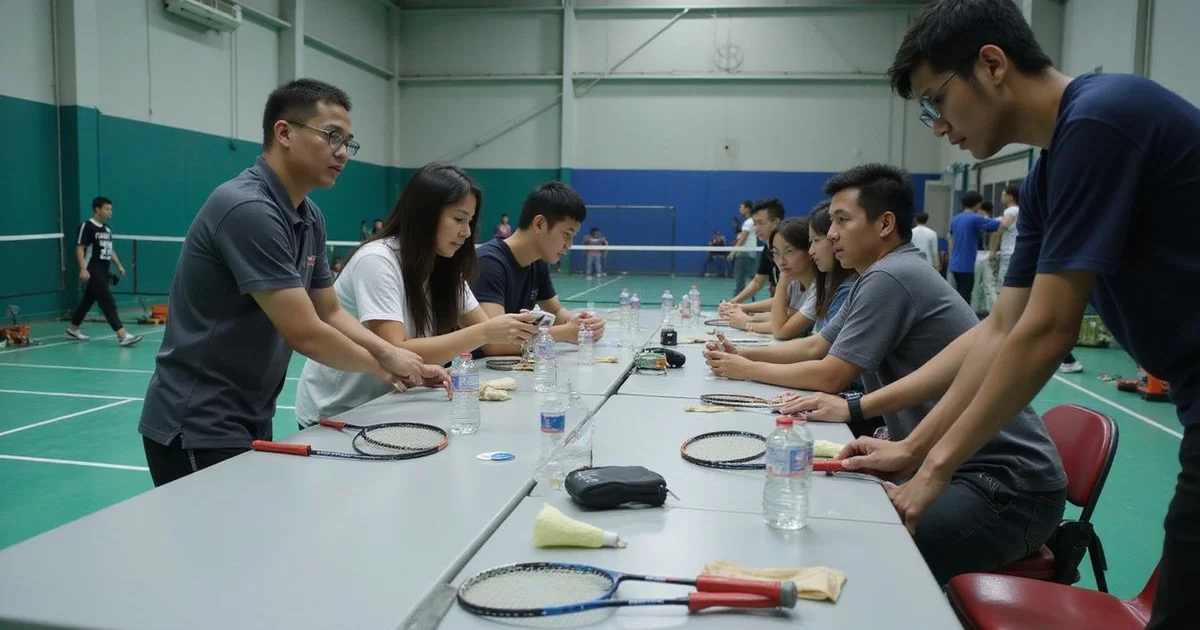
Getting a group of colleagues, friends or classmates onto badminton courts at the same time takes more coordination than a solo booking, but it’s manageable with a bit of planning. This guide covers how many courts you actually need, how to book them as a block, and how to keep a mixed-ability group having fun rather than one-sided. Start with the hourly court rental hub to see venues with enough courts for a bigger group.
Working out how many courts you need
A single court comfortably fits four players in doubles at a time. For a group larger than four, you’re either booking multiple courts to run simultaneously or rotating players through fewer courts with some sitting out between games. As a rough guide:
| Group size | Courts needed for simultaneous play | Rotation needed with fewer courts |
|---|---|---|
| 4-8 players | 1-2 courts | Minimal |
| 9-16 players | 3-4 courts | Some rotation on a 2-court setup |
| 17+ players | 5+ courts | Significant rotation required |
Booking multiple courts as a block
Call or message the venue directly rather than trying to book several individual slots online, since many venues handle multi-court group requests differently from single bookings. Confirm the venue can guarantee courts next to each other, ask about any per-court discount for booking several at once, and get a clear total price before you collect money from the group. Book at least one to two weeks out for anything beyond four courts on a popular evening slot.
Splitting the cost fairly
The simplest approach is dividing the total court cost evenly across everyone attending, collected upfront so you’re not chasing people afterward. If your group has very different attendance patterns, some playing the full session, others dropping in for an hour, a per-hour rate per person is fairer, though it takes more tracking. Either way, settle the method before the day, not after the bill arrives.
Managing mixed skill levels
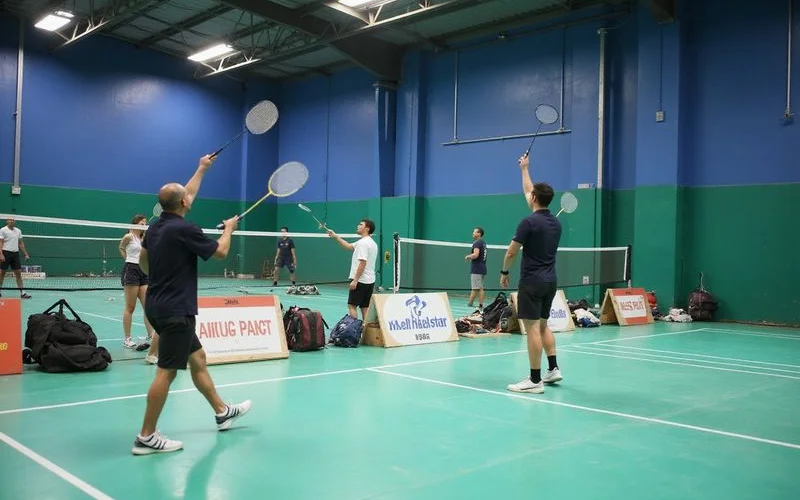
Corporate and social groups are rarely evenly matched, and nothing kills momentum faster than one-sided games. Rotating doubles pairs every 15 to 20 minutes, or running a light round-robin format, keeps stronger and weaker players mixing rather than facing off directly for a full hour. It also naturally builds in rest breaks, which matters for a group that isn’t used to sustained play.
Practical extras worth arranging ahead
Confirm parking capacity if your group is driving separately, since limited parking is a recurring complaint at some of the busier venues and a group of a dozen cars can overwhelm a small lot fast. If the session runs over an hour or two, check whether the venue has enough seating for players resting between rotations, and consider bringing extra water, since not every hall has a well-stocked refreshment counter on site.
Making it a repeat event
If the session goes well and you’re considering a regular slot, ask the venue about a standing weekly or monthly booking. Some offer a modest discount or priority booking for a recurring group, which is worth securing once you know the format works for your team or friend group.
Choosing between a standard hall and an air-conditioned one for a group
For a longer group session, an hour or more of continuous rotation, an air-conditioned hall is worth the extra cost more often than it is for a quick solo game. A room full of players generates a lot of heat quickly, and a stuffy, non-air-conditioned hall can turn an enjoyable team outing into an uncomfortable one by the second hour. If budget allows, it’s often the single upgrade that most improves how the whole group remembers the event.
Running it as a light tournament instead of open play
For a larger corporate group, a simple bracket or round-robin format gives the session more structure than open, unstructured play, and it tends to keep engagement higher for people who aren’t confident players. You don’t need anything elaborate: four to six mini-teams, a straightforward points system, and a short final. It adds a bit of planning but turns a casual booking into something people talk about afterward.
Browse venues with multi-court capacity from our home page, and check our methodology for how we score courts on facilities and value for group bookings.
FAQ
- How many courts do I need for a group of 12 to 16 people?
- As a rough guide, one court comfortably supports four players playing doubles at a time, so a group of 12 to 16 typically needs three to four courts to keep everyone rotating without long waits.
- How far ahead should I book courts for a corporate event?
- Book at least one to two weeks ahead for multiple courts on an evening or weekend, since group bookings of that size are harder for a venue to fit in on short notice.
- How do we handle very mixed skill levels in a group session?
- Split into rotating pairs or mini round-robins rather than fixed teams, so stronger and newer players both get reasonable games instead of one-sided matches all afternoon.
- Can we book courts and coaching together for a team event?
- Many academies can arrange a light group coaching session alongside court time for a corporate or social event. Ask directly, since this is usually a custom arrangement rather than a standard package.