
How racket restringing works, step by step
By Janice · Updated 2026-07-04
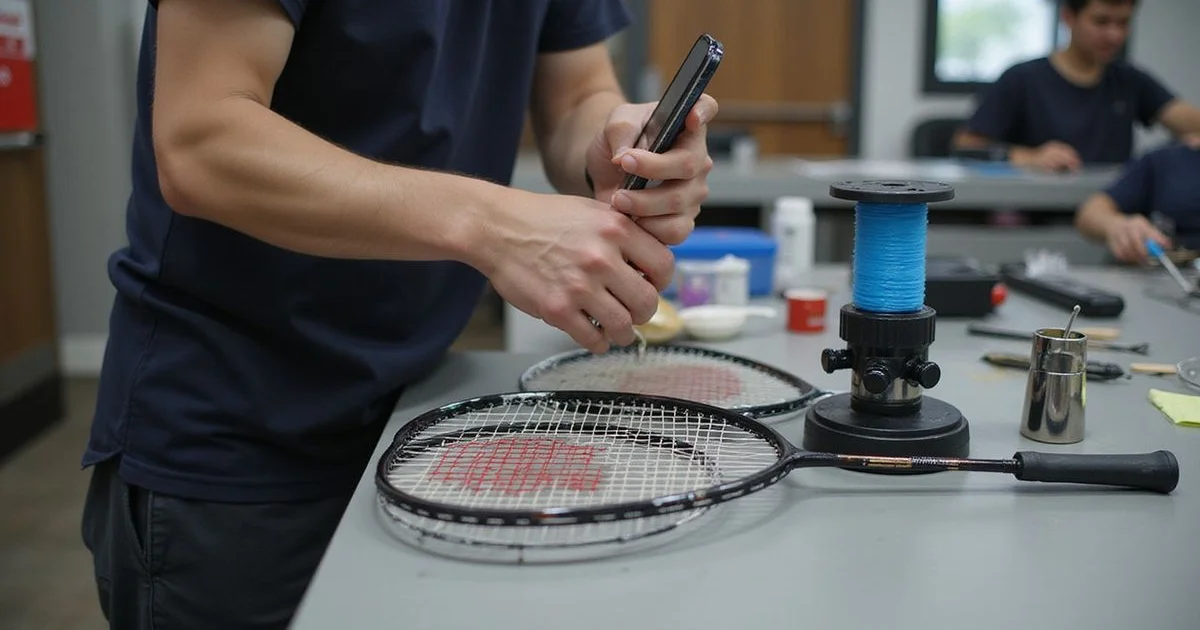
Most players hand over a racket for restringing without knowing much about what happens to it in the back room. Understanding the actual process helps you ask better questions, judge turnaround times fairly, and spot a rushed job before it costs you a match. The pro shop and stringing hub is a good place to compare shops across Kuala Lumpur before you pick one.
The process, step by step
Restringing follows a fairly standard sequence at most shops:
- Old string removal. The technician cuts out the existing string, checking the frame and grommets for any damage while it’s exposed.
- String selection confirmation. You’ll usually confirm string type and tension again at this point, especially if you didn’t specify exact numbers upfront.
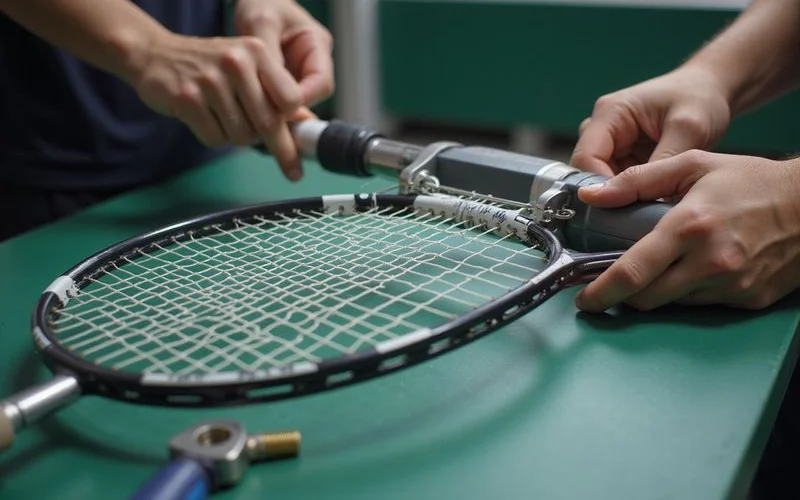
- Mounting on the stringing machine. The racket frame is clamped securely to keep it stable during the high-tension stringing process.
- Main strings first, then crosses. Vertical strings go in first, followed by the horizontal crosses that lock the pattern in place.
- Knotting and finishing. The ends are tied off and any excess trimmed, and the finished string bed is checked for even spacing.
| Step | What’s happening | Why it matters |
|---|---|---|
| Old string removal | Frame inspected for damage | Catches cracks before restringing makes them worse |
| Mounting and clamping | Frame stabilised on the machine | Keeps tension accurate and even |
| Stringing (mains then crosses) | String woven and tensioned | Determines feel, control and power |
| Finishing | Knots tied, bed checked | Prevents early string slippage or breakage |
How long it actually takes
A straightforward restring typically takes a skilled technician somewhere around 15 to 25 minutes of hands-on time, though shops usually quote next-day turnaround because your racket goes into a queue behind others. If you need it back the same day, ask directly. Many pro shops offer rush service for an added fee, prioritising your racket ahead of the standard queue.
What can go wrong during stringing
Occasionally a frame is damaged during the process, more often on older or lower-quality rackets that weren’t built for higher tensions. A good technician checks the frame’s rated tension limit before starting and will tell you if your requested tension is too high for the frame, rather than stringing it anyway and risking a crack. This is one of the clearer signs of a shop worth trusting with your racket long term.
What to check when you collect it
Before you leave the counter, look over the string bed. The spacing between strings should be even, with no visible bunching or gaps, and the tension should feel consistent when you press different areas of the bed with a finger. Confirm the string type and tension match what you asked for. If anything looks off, raise it on the spot. A shop confident in its work will happily walk you through what was done.
Why this matters beyond just having strings
A well-strung racket holds tension more evenly and lasts longer before it needs redoing, while a rushed or careless job can lead to premature snapping or an uneven feel that throws off your shots without you immediately realising why. Understanding the process makes it easier to tell a genuinely good pro shop from one that’s just fast. For a sense of how often that redoing should happen based on how much you play, see our guide on how often to restring a badminton racket.
Machine stringing vs hand stringing
Most Kuala Lumpur pro shops use electronic stringing machines, which apply tension consistently and are fast enough to handle regular volume. A smaller number of technicians still hand-string using a manual crank machine, which some experienced players prefer for a particular feel, though it takes longer and typically costs more. For most recreational and club-level players, a well-maintained electronic machine produces a perfectly consistent result, and the difference mainly matters at a competitive level.
Dropping off and picking up efficiently
If you’re dropping a racket off before work or between errands, call ahead to confirm the shop has your requested string type in stock and can meet your target pickup time. Walking in without checking sometimes means waiting an extra day if a specific string needs to be ordered in. It’s a small step that avoids the most common source of frustration with restringing: expecting next-day service and being told it’ll be two or three days instead.
Browse pro shops from our home page, and see the methodology behind how we score them on turnaround, quality and price.
FAQ
- How long does restringing a badminton racket take?
- Standard turnaround is usually next day at most Kuala Lumpur pro shops. Same-day or rush service is often available for an extra fee if you need it back sooner.
- Can any pro shop restring any racket?
- Most pro shops can string most rackets, but older or unusual frames sometimes need a lower maximum tension to avoid damage. A good shop will flag this before stringing rather than after.
- What should I check when I pick up a freshly strung racket?
- Look at the string bed for even spacing and tension by feel, and check that the grommets around the frame look intact. Ask the shop to confirm the tension and string type used, since it should match what you asked for.
- Why did my string break shortly after being restrung?
- It can happen from a sharp mis-hit, a frame issue, or occasionally a stringing fault. If it snaps within a day or two of normal play, it's reasonable to ask the shop whether it was a stringing issue.