
Getting ready for a badminton tournament: a venue and prep checklist
By Janice · Updated 2026-07-09
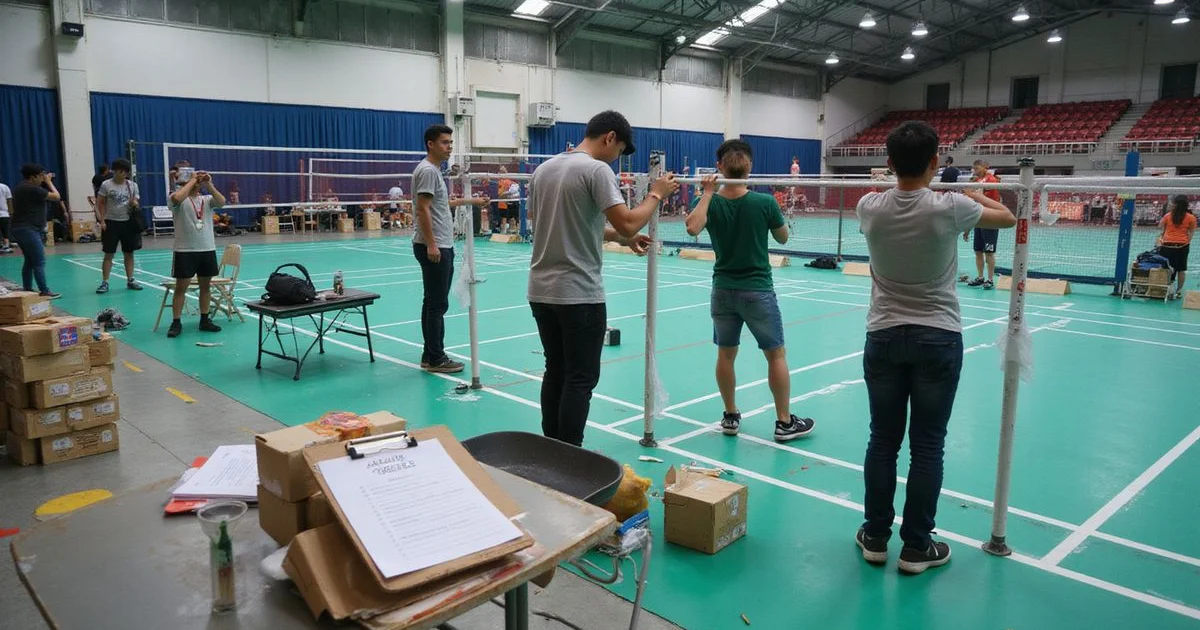
Organising a badminton tournament or league day involves more than just booking enough courts. Venue grade, scheduling, and a handful of logistics most first-time organisers overlook can make the difference between a smooth event and a stressful one. This checklist covers what to sort out before the day. The tournament and league venues hub is the place to start comparing venues built for multi-court bookings.
Choosing the right venue grade
Venues generally fall into three grades: community halls, sports complexes, and premium air-conditioned arenas. A community hall works fine for a casual, low-stakes tournament among friends or a company league. A sports complex offers better court quality and more consistent conditions for a club-level event. A premium air-conditioned arena is worth the extra cost for a higher-stakes or longer full-day tournament where player comfort and consistent conditions matter more.
| Venue grade | Best suited to | Typical cost level |
|---|---|---|
| Community hall | Casual, low-stakes tournaments | Lowest |
| Sports complex | Club-level, regular league play | Moderate |
| Premium air-conditioned arena | Higher-stakes or full-day events | Highest |
Based on typical venue hire rates across Kuala Lumpur, a full day booking for several courts at a sports complex often costs meaningfully more than the same booking at a community hall, and a premium air-conditioned arena sits higher again. Get an exact quote based on your court count and event length rather than assuming a flat rate.
The pre-event checklist
- Confirm court count and layout. Make sure the venue can guarantee enough adjoining courts for your bracket to run in parallel.
- Check court specifications if it matters for your event. Line markings, net height and surface type should meet the level of play expected.
- Ask about seating and spectator space. Insufficient seating is a recurring complaint at some venues during busier events.
- Confirm lighting quality, especially for an event running into the evening.
- Clarify what’s included. Scoreboards, shuttlecocks, and basic first aid supplies aren’t always part of the booking.
- Check parking capacity against your expected turnout, since limited parking is a common issue at popular venues.
If you’re booking multiple courts for a less formal group outing rather than a full tournament, our guide on planning a group or corporate badminton session covers how to work out court numbers and split costs.
Scheduling a multi-round event
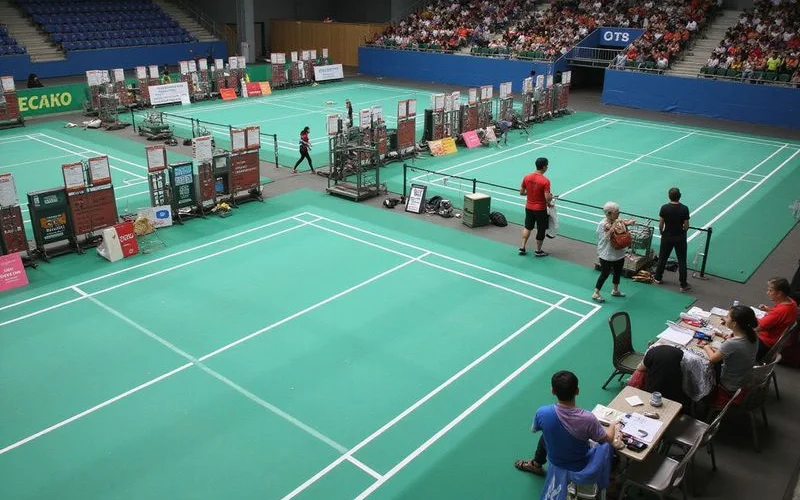
Build extra time into your schedule beyond the theoretical minimum. Matches run long, players show up late, and a tight schedule with no buffer tends to fall apart by round three. A rough rule that works for many organisers is padding each round by 15 to 20 percent over the expected match length, which absorbs the inevitable delays without derailing the whole day.
Confirming the fine print
Before paying a deposit, get the cancellation and rescheduling policy in writing, particularly important for a full-day, multi-court booking where a lot is riding on one date. Ask what happens if a piece of equipment fails partway through, a light goes out or a net needs replacing, and how quickly the venue can respond on the day itself.
After the booking is confirmed
Do a walkthrough of the venue a few days before the event if you can, checking court conditions, lighting and any equipment you’re relying on the venue to provide. It’s much easier to sort out a problem with a few days’ notice than to discover it as players are warming up on the morning of the tournament.
Briefing players and volunteers ahead of time
Send court assignments, rough match times and venue directions to players a few days out rather than the night before, since a venue with multiple courts and a busy schedule is genuinely hard to find your way around if nobody knows where to go. If you have volunteers helping run the day, walk them through the schedule and their specific responsibilities in advance, whether that’s checking scores, managing the queue for the next round, or handling player questions at a central desk.
Handling weather and backup plans
Even for an indoor venue, factor in the possibility of transport delays from heavy rain, which is common enough in Kuala Lumpur to plan around. Building a short buffer into the start time, and having a way to reach all players quickly if the schedule shifts, saves a lot of stress compared to scrambling to notify people individually on the day. A shared group chat or broadcast list set up in advance is usually enough.
Compare tournament venues from our home page, and see our methodology for how we score them on facilities, reliability and value.
FAQ
- How many courts should I book for a small local tournament?
- For a tournament with 16 to 32 players, four to six courts running simultaneously usually keeps the schedule moving without excessive waiting between rounds, depending on your format and time limit.
- Does a tournament venue need to meet specific court standards?
- For casual or club-level tournaments, most well-maintained courts are fine. For a sanctioned or higher-level competitive event, check the venue meets recognised court specifications for line markings, net height and playing surface.
- How far in advance should I book a venue for a tournament?
- Book at least three to four weeks ahead for a multi-court booking spanning a full day, longer if you need a specific weekend date at a popular sports complex.
- What does a venue booking for a tournament typically include?
- It varies. Some bookings are court time only, others include basic amenities like scoreboards or seating. Confirm exactly what's included versus what you need to arrange separately before you finalise the date.