
Who is liable for a badminton injury in KL?
By Janice · Updated 2026-07-15
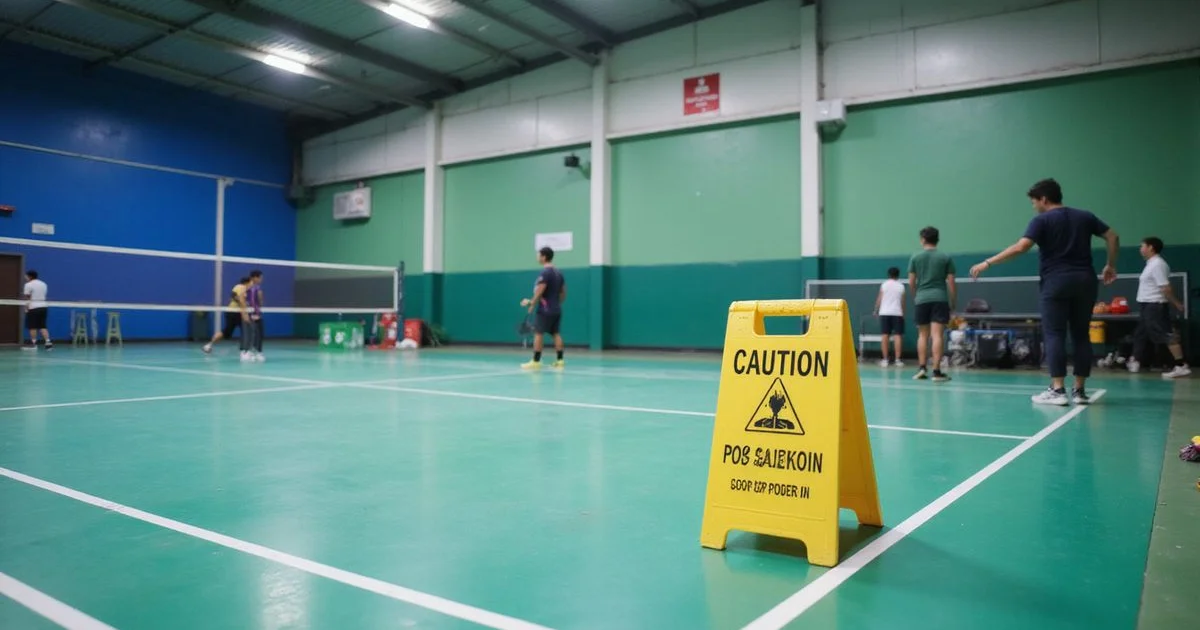
Badminton is a fast, physical sport, and injuries happen even at recreational level: rolled ankles, strained calves, the occasional collision on a doubles court. Most are just part of playing an active sport. Occasionally, though, an injury is linked to something the venue could reasonably have prevented, a slippery floor, broken equipment, poor lighting. This guide is general information, not legal advice, and doesn’t replace speaking with a qualified professional about a specific situation.
The general distinction that matters
Broadly speaking, liability tends to turn on one question: was the injury a normal risk of playing an active sport, or did it result from a hazard the venue reasonably should have fixed? A twisted ankle from an awkward landing during normal play is generally treated as an inherent risk of the sport itself. An injury caused by, say, a court surface reviewers had already flagged as slippery, or a net post that wasn’t properly secured, sits in a different category, closer to a venue maintenance issue.
| Scenario | Generally closer to |
|---|---|
| Rolled ankle during normal, competitive play | Inherent sporting risk |
| Injury from a known slippery or damaged court surface | Possible venue responsibility |
| Injury from faulty or poorly maintained equipment | Possible venue responsibility |
| Collision with another player during normal doubles play | Inherent sporting risk |
This is a general framework, not a rule that applies the same way in every situation. Specific facts matter, and this guide can’t tell you how a particular case would be assessed.
What venues typically do to manage this
Some venues ask players to sign or verbally acknowledge a waiver covering the inherent risks of playing badminton, essentially confirming you understand that injuries can happen during normal play. Others don’t formalise this at all. Either way, a waiver generally doesn’t remove a venue’s responsibility to maintain safe facilities, keep floors reasonably dry and clean, and fix known hazards. It mainly addresses the ordinary risks that come with playing any physical sport.
Practical steps before you play
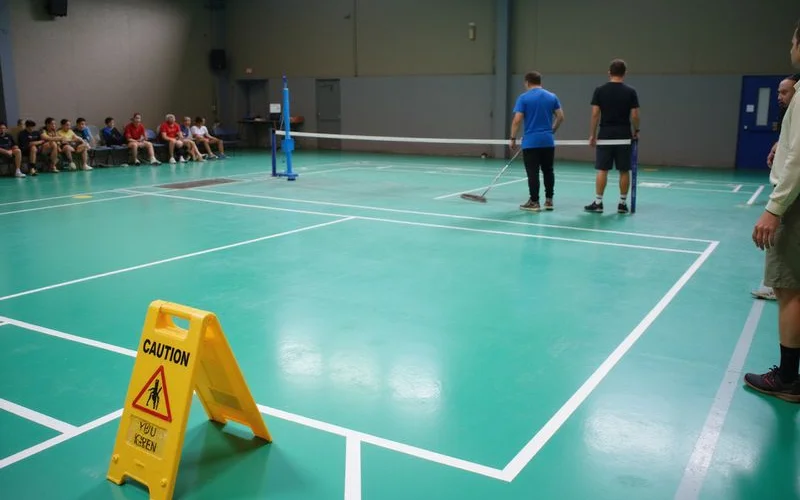
If a specific hazard has caught your eye before you even start, a visibly wet patch, a loose net, uneven flooring, flag it to venue staff before playing rather than after an injury occurs. This protects you either way: the hazard often gets addressed on the spot, and if it doesn’t, you’ve created a clear record that the issue was raised.
What to do if you’re injured
Report the injury to venue staff immediately, note the specific condition involved if a hazard seems to have contributed, and seek medical attention promptly for anything beyond a minor bump or bruise. If you believe a genuine venue hazard caused or worsened the injury, keeping notes on what happened, and photos of the condition if it’s safe and reasonable to take them, is useful information to have on hand regardless of what happens next.
Insurance worth checking
Some personal accident or health insurance policies include coverage for sports-related injuries, though the details vary considerably by provider and plan. It’s worth checking your own policy documents, or asking your insurer directly, before you assume you’re covered for something like a badminton injury specifically. Some coaching academies and league organisers also carry their own insurance for organised sessions, which is worth asking about if you’re joining a formal programme.
Group and corporate bookings carry the same considerations
If you’re organising a group or corporate session, the same general principles apply, just across more players at once. It’s worth confirming with the venue what their policy is on injuries during a larger booking, and whether any waiver or acknowledgement process applies to group attendees as a block or individually. For a recurring team or league booking, some organisers choose to arrange their own participant insurance on top of whatever the venue provides, specifically to cover gaps that a one-off venue waiver might not address.
Reducing risk in the first place
Most of what reduces injury risk is unrelated to liability at all: a proper warm-up before intense play, non-marking shoes appropriate for the court surface, and reasonable pacing rather than pushing through fatigue or existing niggles. A venue with clean, well-maintained courts and good lighting also meaningfully reduces the odds of the kind of hazard-related injury this guide focuses on, which is one more reason facility quality is worth weighing alongside price when choosing where to play.
For situations involving a significant injury or a genuine dispute over what happened, speaking with a qualified legal professional is the right next step rather than relying on general guidance like this. Browse venues and check facilities from our home page, and see our methodology for how safety-relevant factors feed into how we score courts.
FAQ
- Is a badminton venue automatically responsible if I get injured playing there?
- Not automatically. Liability generally depends on whether the injury resulted from a genuine hazard the venue failed to address, such as a dangerously slippery floor, versus a normal risk inherent to playing an active sport.
- Does my own insurance cover a sports injury from badminton?
- Some personal accident or health insurance policies cover sports injuries, though terms vary by provider and policy. Check your specific policy documents or ask your insurer directly rather than assuming coverage.
- Do badminton venues in Kuala Lumpur usually require a waiver?
- Practices vary by venue. Some ask players to acknowledge inherent risk verbally or in writing, others don't formalise it at all. Ask the venue directly about their policy if this matters to you.
- What should I do immediately after a court-related injury?
- Report it to venue staff on the spot, note the specific condition involved if relevant, such as a wet or damaged floor, and seek medical attention promptly for anything beyond a minor knock.